
← All work02/042025

CycleSync

Cycle tracking built for irregularity.

CycleSync
Role:
Product Designer
Type:
Self-initiated concept
Skills:
UX Research · UI Design · Health UX
Tools:
Figma
01
6–12% of women affected
02
3 users + 1 expert
03
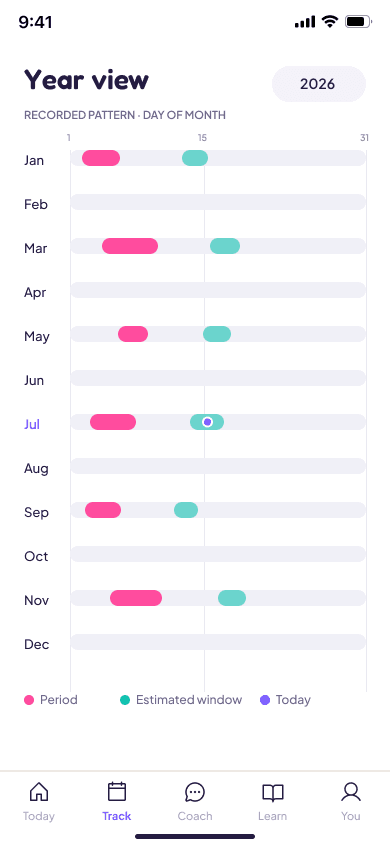
Yearly circular model
01The problem:

PCOS affects roughly 6–12% of reproductive-aged women, and the experience is isolating: menstrual health is taboo, patients often don't know who to talk to after diagnosis, and mainstream tracking apps make it worse — their monthly-calendar model assumes regular cycles, so irregularity reads as an error state. Patients told me it made them feel “abnormal.” Mental and emotional wellbeing, the hardest part of PCOS, is absent from these products entirely.

+What the research said:
01

“I don't know who to talk to”

Isolation after a PCOS diagnosis came up again and again — support mattered more than any single feature.

02

Taboo creates information gaps

Because menstrual health stays unspoken, patients struggle to find information that applies to them.

03

Irregularity reads as an error state

Standard 28-day calendar UIs make irregular cycles feel 'abnormal' — the UI itself was hurting users.

The signature decision, visualised:

A month grid assumes a 28-day loop — irregularity reads as an error.

A year ring has no 'correct' length — irregularity is just the shape of your year.

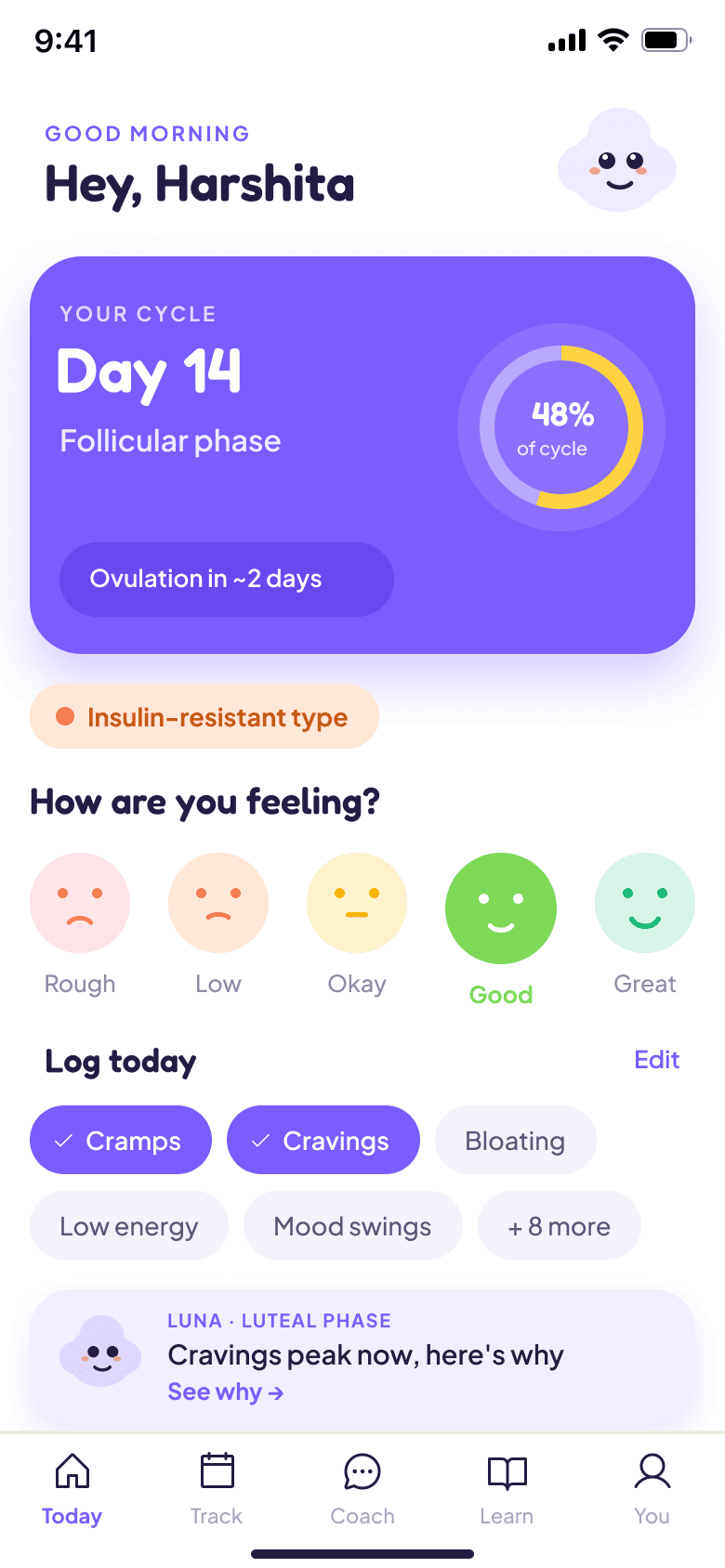
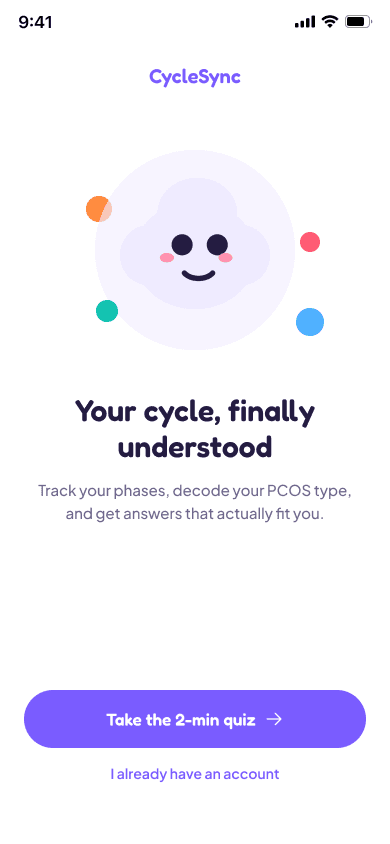
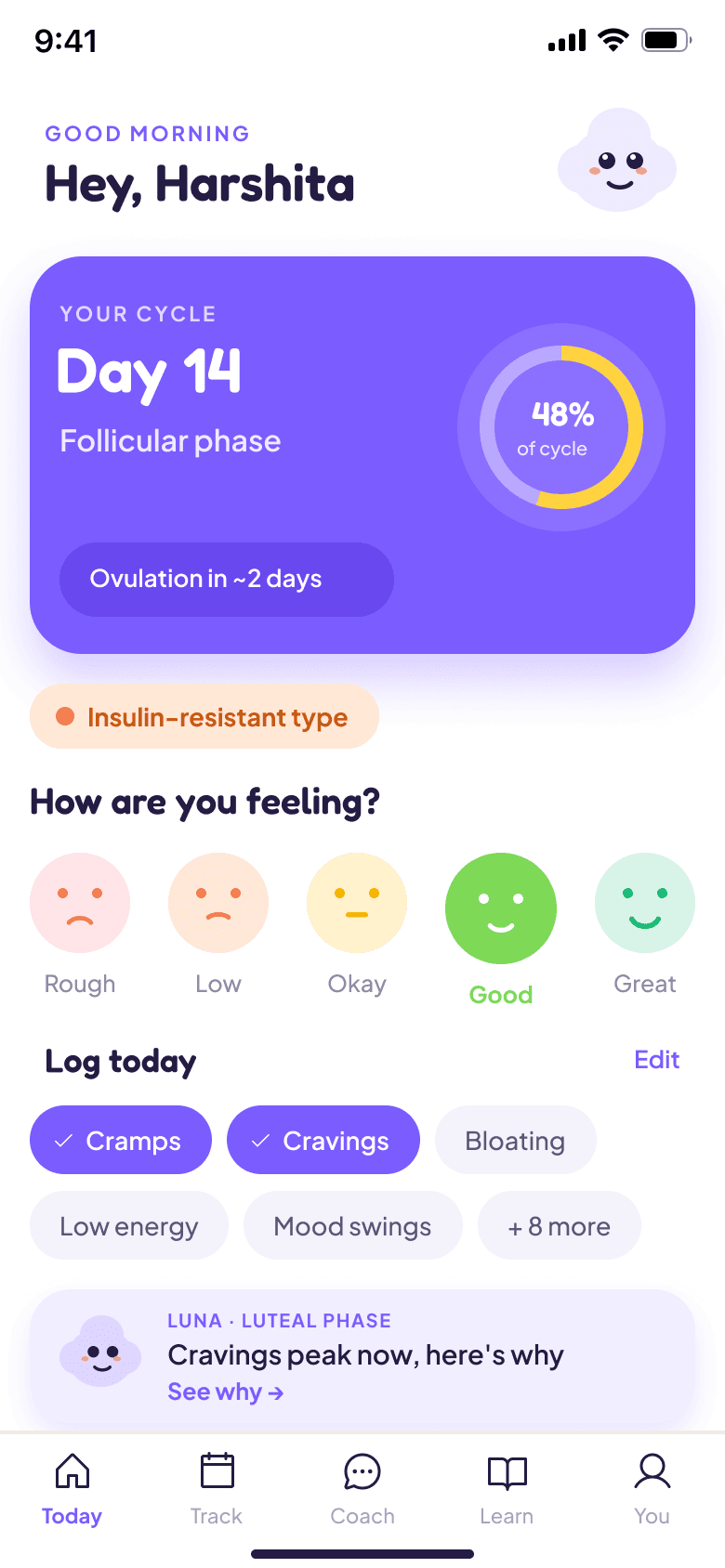
CycleSync — overview
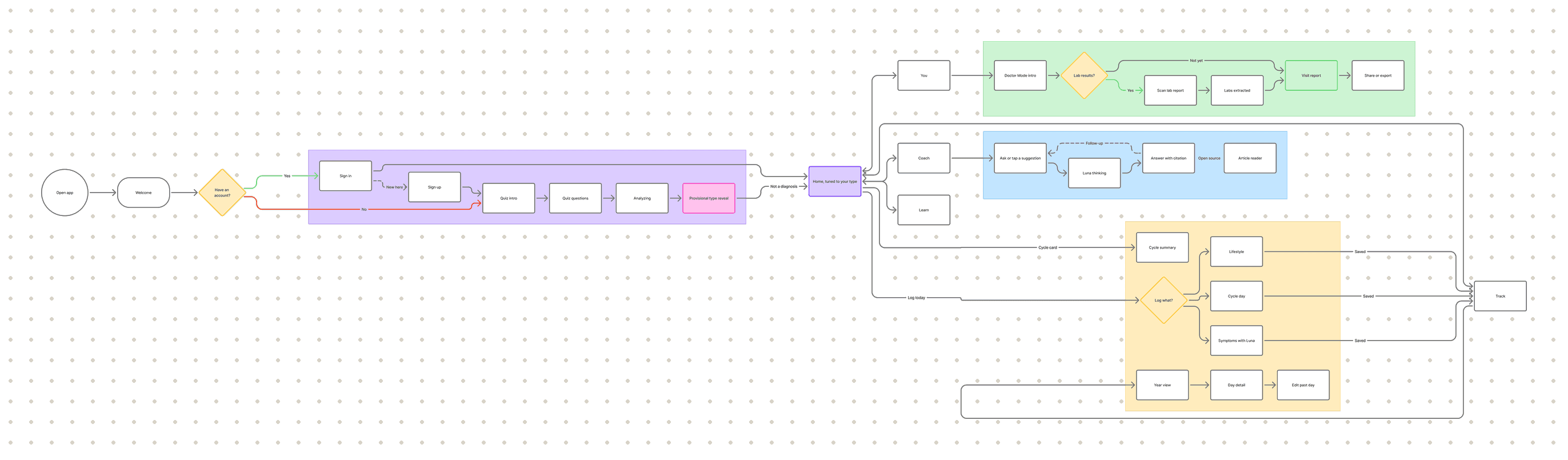
The core flow:
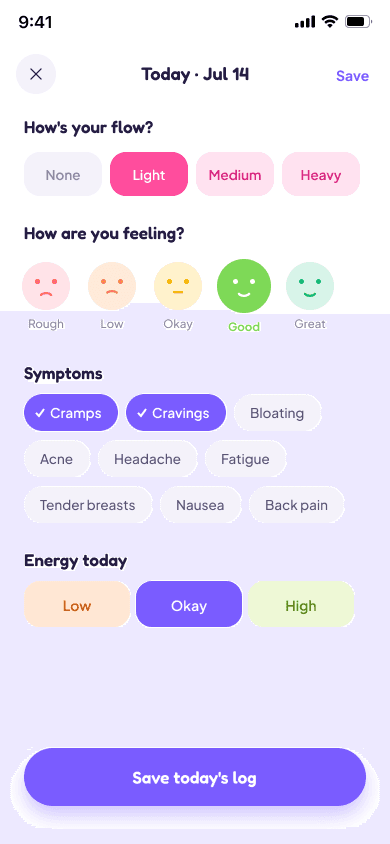
1Daily check-in
2Log symptoms
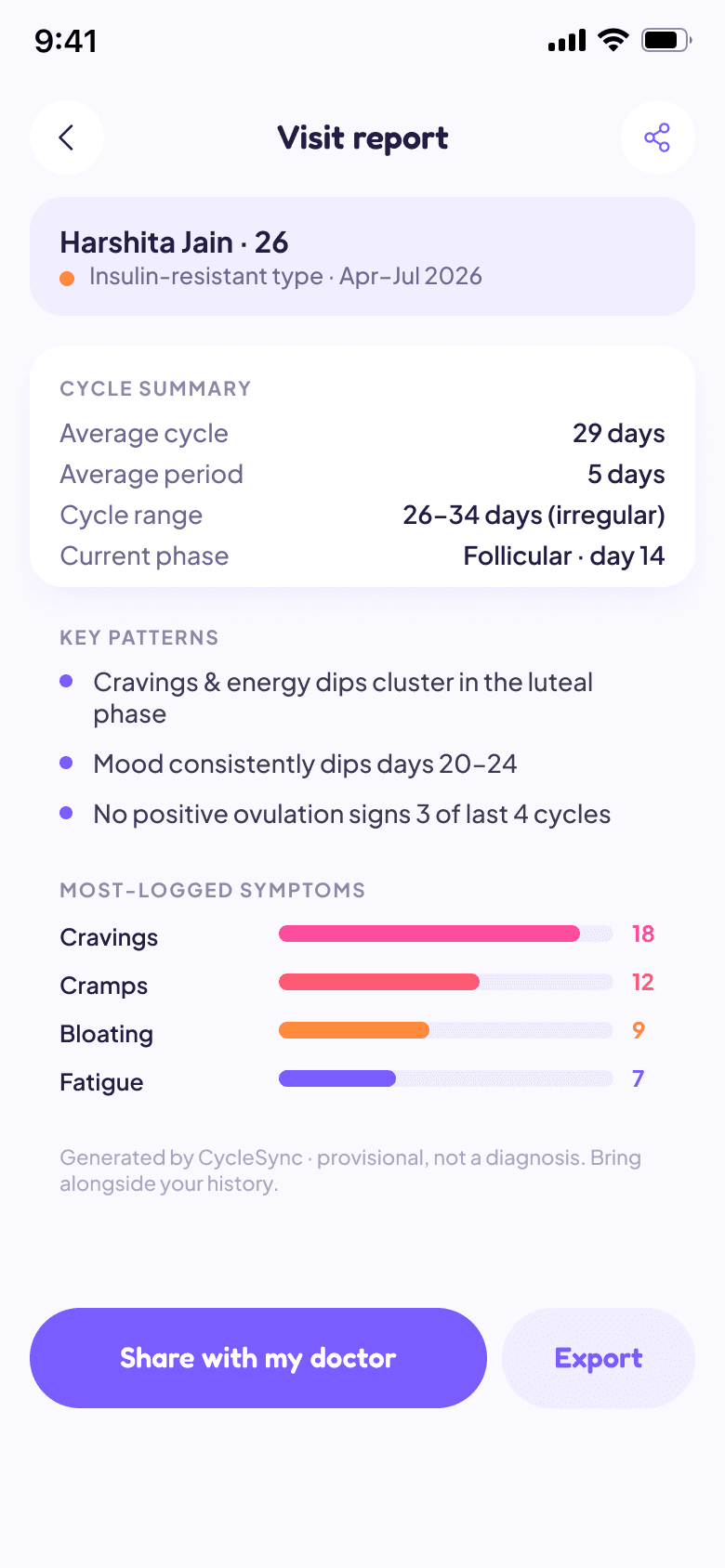
3See insights
4Lean on community

Tracking, understanding and support in one loop.

02Key decisions:
01

A yearly circular tracker, not a monthly calendar

The signature decision: replace the month grid with a yearly circular view designed for irregularity. When the model doesn't assume a 28-day loop, an irregular cycle stops looking like a mistake.

02

Community as a core surface, not a tab

Isolation was the loudest research finding. CycleSync builds in experience-sharing and peer encouragement, and lets users invite trusted friends and family into their support loop.

03

AI-personalised resources, filtered by symptoms

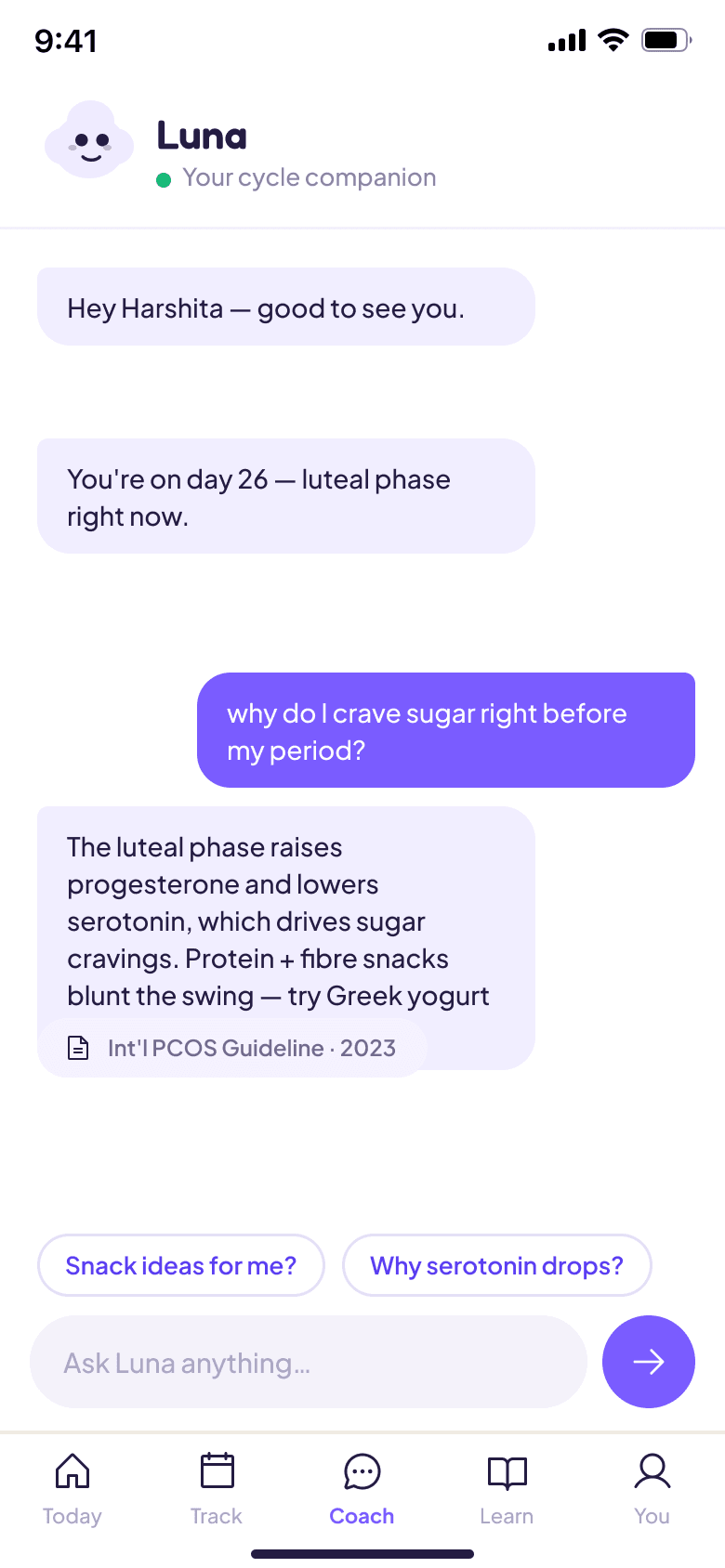
Instead of a generic content feed, suggested reading is filtered by each user's symptoms and preferences — lowering the barrier to finding information that actually applies to them.

04

Personalise everything

No two PCOS patients present the same. Symptoms, quick links, community recommendations and monthly insights are all user-configurable rather than fixed.

vsThe shift:
Typical tracker
  • Assumes a regular 28-day loop
  • Mental health lives in a separate app
  • Generic one-size content feed
  • Fixed layout, fixed assumptions
CycleSync
  • Yearly circular model, built for irregularity
  • Mood and wellbeing tracked alongside cycles
  • AI-filtered resources by symptom
  • Everything personalisable
CycleSync — 2
CycleSync — 3
CycleSync — 4
CycleSync — 5
CycleSync — 6
CycleSync — 7
03Outcome:

Tested with 3 users and 1 domain expert: positive reactions to using the product for mental wellbeing alongside menstrual tracking, with feedback that the design streamlined tracking and encouraged a more proactive approach to self-care.

6–12% of women affected 3 users + 1 expert Yearly circular model
04What I learned:
Next project
Finance AI