Finance AI
Mindful money habits, AI-guided.
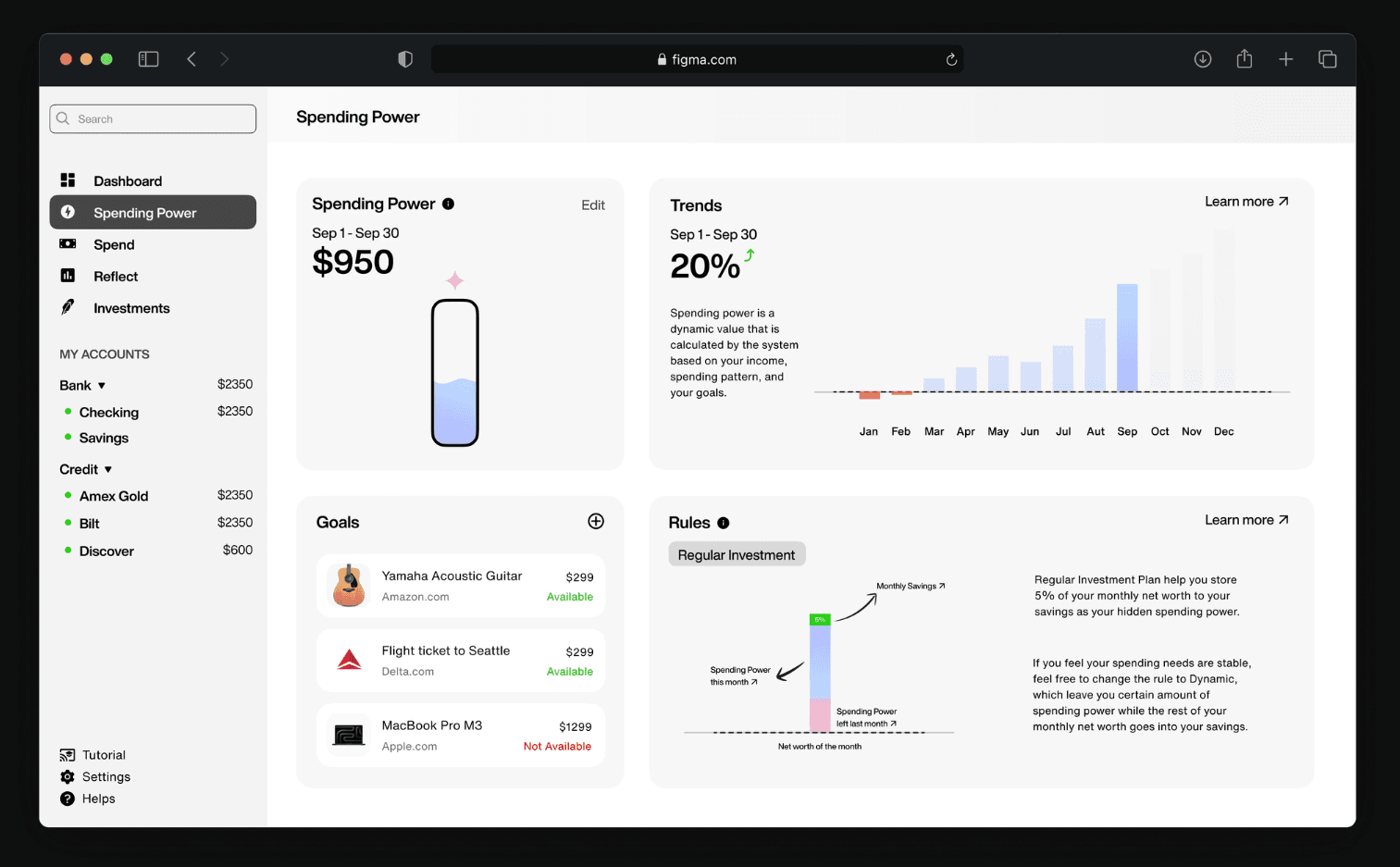
Digital money removed every point of friction from spending — and with it, every natural moment of reflection. Saving became invisible: there's no equivalent of watching cash leave your wallet. The brief: design a web platform that fosters mindful spending and savings habits, and counters the negative behavioral effects of digital money.
Digital money removed the pause
Cash forced a moment of reflection at every payment; tap-to-pay deleted it — and saving lost its trigger.
Charts answer the wrong question
Dashboards explain what happened. Habit change needs 'what should I do right now'.
Nudges work at the decision moment
A savings prompt inside the spending flow beats a guilt-trip report at the end of the month.
Cash forced a pause — you watched money leave.
Digital spending is frictionless; Finance AI puts the pause back, as a coach.
AI as a coach, not a dashboard
Most finance tools answer “what happened to my money?” with charts. Finance AI is built around habit guidance — the AI surfaces nudges and savings moves at decision moments, rather than reporting after the fact.
Make saving visible where spending happens
The design puts savings progress and trade-offs into the spending flow itself, restoring the moment of reflection that cash used to provide.
The 7-hour constraint as a method
Problem framing, flows, UI and a presentable solution in a single solo sprint. The timebox forced ruthless scoping: one core loop, designed well, instead of five designed halfway.
- ✕ Reports after the money is gone
- ✕ Charts you have to interpret
- ✕ Guilt as the motivator
- ✓ Coaching at the decision moment
- ✓ One clear next move
- ✓ Habits framed as wins
A complete, presented product concept produced in seven hours of focused solo work — the project doubles as a proof of design velocity: how far a focused process gets from a standing start in one day.
- Constraints sharpen scope — the timebox made prioritization decisions for me that would otherwise have taken days.
- Presenting under time pressure is its own skill: the story of the design matters as much as the screens.